1Introduction
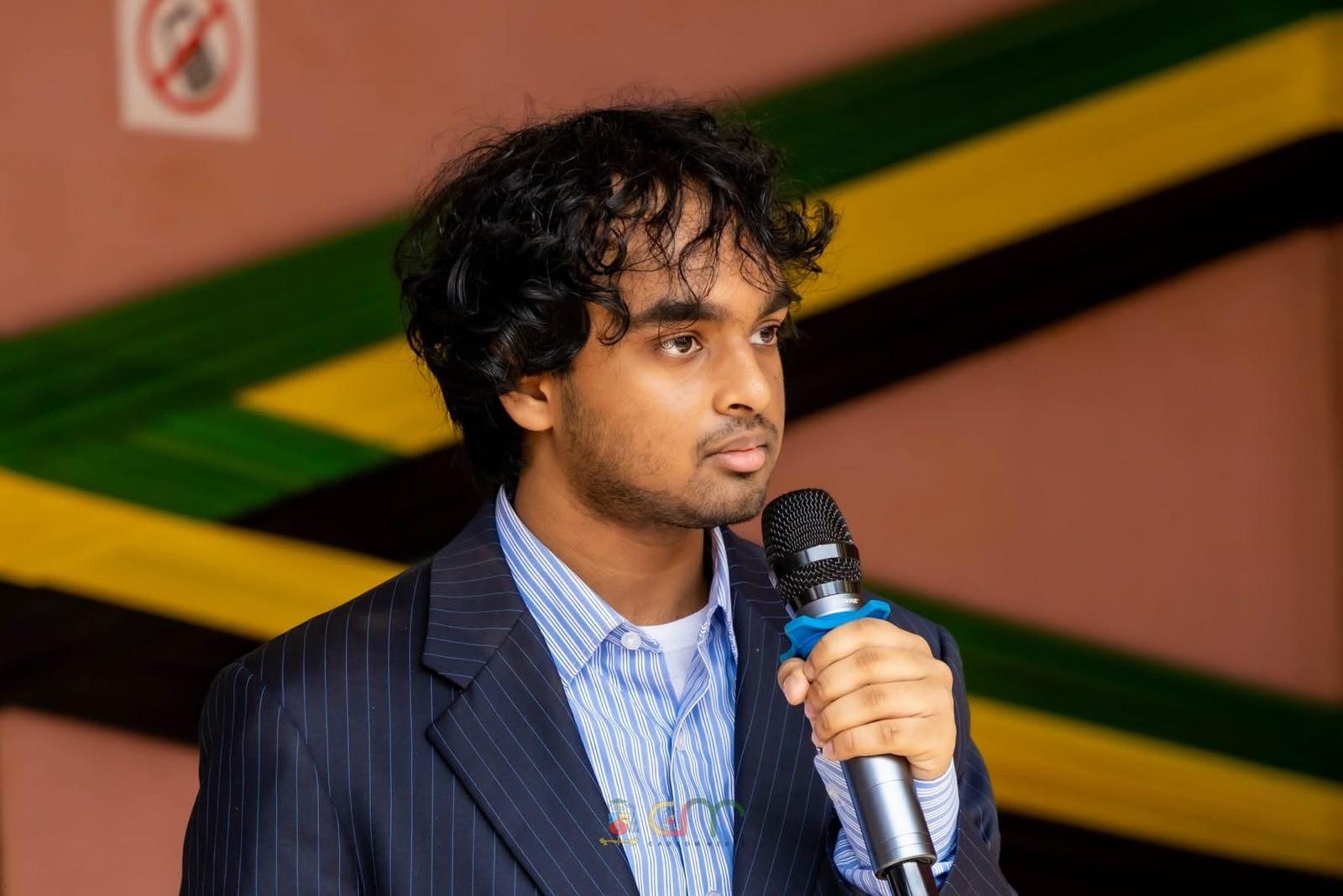
I'm Nathan, an aspiring physician-scientist from San Jose, California. This page is organized like a preprint because that is how I've learned to work: state the problem, do the work, publish the results, and revise. The problem is that a child's access to basic healthcare still depends overwhelmingly on where they happen to be born. Sections 2–4 document the academic foundation, the research, and the field program built against that problem; Section 5 gives the timeline, and Section 6 covers everything that doesn't fit a CV category but shapes all of it.
2Academic Record
All work reported here runs on top of a full accelerated honors / AP science course load at Valley Christian High School: 4.10 weighted GPA (3.69 unweighted), 1510 SAT (single sitting). Six AP courses completed (Chemistry, English Language, Psychology, U.S. History, Computer Science Principles, and Statistics through UC Scout, 2026), with AP Biology, AP Calculus AB, AP English Literature, AP Microeconomics, AP Cybersecurity, and Honors Physics in progress for senior year (2026–27). Honors: AP Scholar with Distinction and the National Recognition Program Award, both from the College Board; Highest Honors in 10th and 11th grade and High Honors in 9th on the Valley Christian honor roll. Intended major: neuroscience / pre-med.
College and online coursework: Introduction to Statistics at Santa Clara University (college credit, 2025), which supplied the inferential toolkit (z/t-tests, chi-square, regression) used to analyze FutureBright's pre/post camp surveys; Introductory Human Physiology, Duke University via Coursera (2024); and Python for Data Science & AI, IBM via Coursera (two certificates, 2024), the foundation for the computer-vision work in Section 3.3.
Research training: Polygence Research Mentorship Program (2024–2026, under mentor Mikayla Wilson); product research internship at reThink64 Bionetworks, a biotech startup (2025); a full-time two-week Impact Internship in the HSIP health-science program (2024), covering research, health-dataset analysis, and a final presentation to mentors; the Stanford Neurosciences Journal Club (2023–24), where I presented a key paper's methods and findings on mouse-model gender neuroscience; and the Medicine Pathway at UC Berkeley Summer Springboard (2023), a two-week residential program of physician lectures, med-school pathway seminars, and clinical case discussions, where I earned a first CPR certification.
3Research
Eczema affects over 70 million children worldwide, and the long-term safety of its most common treatment is surprisingly under-studied. I approached the gap from three directions.
3.1 Literature review (first author)
"Adverse Effects of Topical Corticosteroid Usage in Children: A Review" synthesizes 20+ clinical sources on long-term topical corticosteroid safety. Written under mentor Mikayla Wilson through Polygence (2024–2026), the abstract was selected and published for the International Research Conference for Children and the Polygence Symposium; the full manuscript is under journal review [1].
3.2 Experimental disease model
In my school's Scientific Research Course (2025–2026), I designed and ran a semester of experiments testing ceramide-deficient Drosophila melanogaster as a model for eczema's skin-barrier dysfunction, roughly 80 hours of work. In a Toluidine Blue permeability assay, ~70% of mutant flies stained versus ~10% of wild-type: a sevenfold difference. The poster, "Drosophila melanogaster as an Analogous Model for Ceramide-Related Eczema: A Preliminary Study," was defended before a specialist judging panel at the International Research Conference for Children, where I was one of five students selected for the Best Poster Award (2026); the abstract was published, and the work was also presented at the Synopsys Science & Technology Championship [2].
3.3 Applied AI: Eczema Vision
Eczema Vision (2026–present) is an open-source computer-vision model that classifies eczema from skin images, built under 1:1 engineering mentorship with Jeffrey Moon through Curious Cardinals: image preprocessing, labeling, training, and evaluation. The code is published open-source on GitHub, and the model runs in the browser on its project page, where anyone can try it on a photo without the image ever leaving their device [3].
4The FutureBright Program
At 15, I co-founded FutureBright Inc., a registered 501(c)(3) nonprofit, because the organization I wanted to join didn't exist. FutureBright funds and organizes free health camps, donates medical equipment, and builds educational infrastructure, and it publishes its results and financials openly. Principal results to date are summarized in Table 1.
| Intervention | Location | n | Year |
|---|---|---|---|
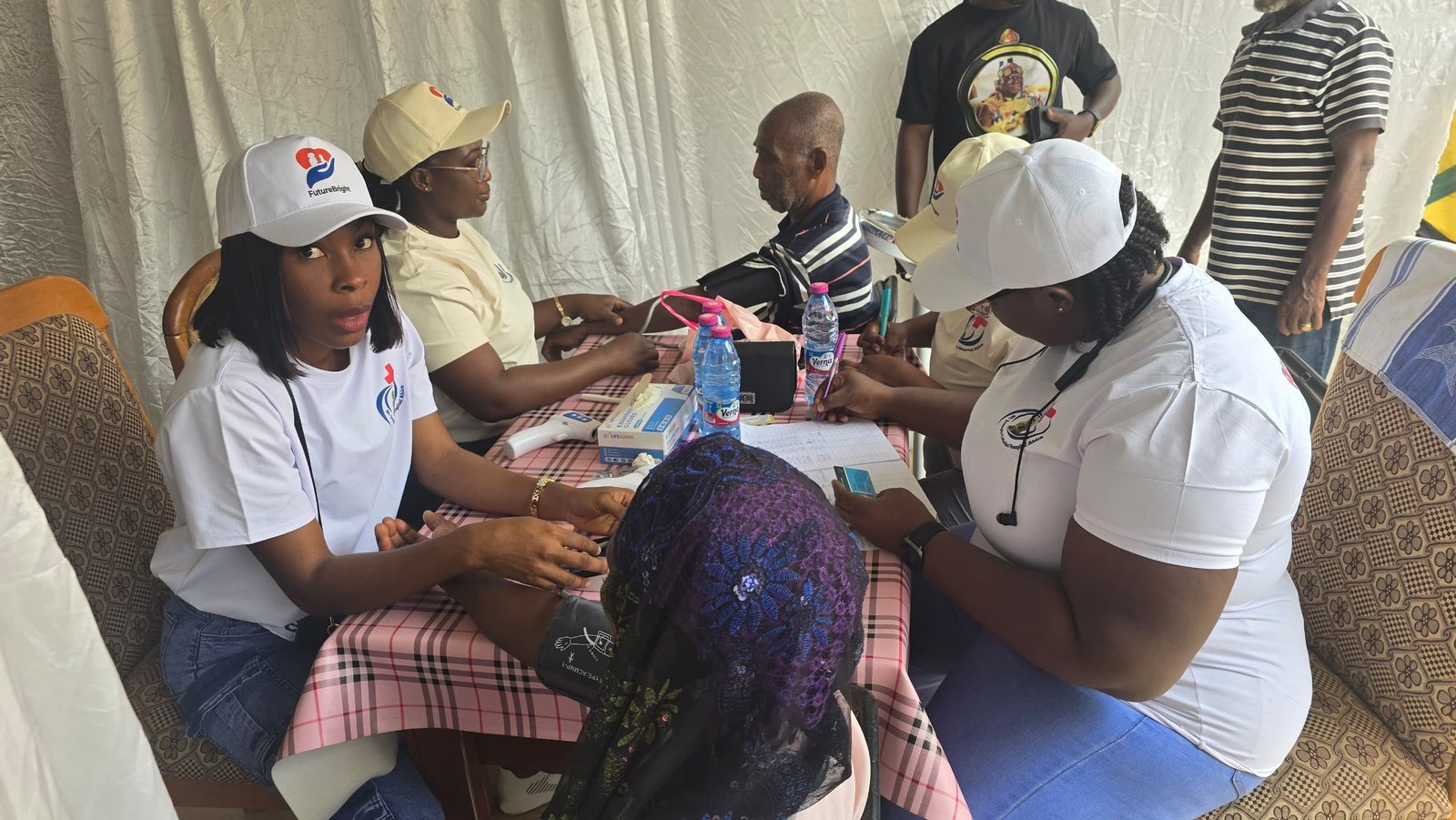
| Community health screening, one day | Abira, Ghana | 400+ | 2026 |
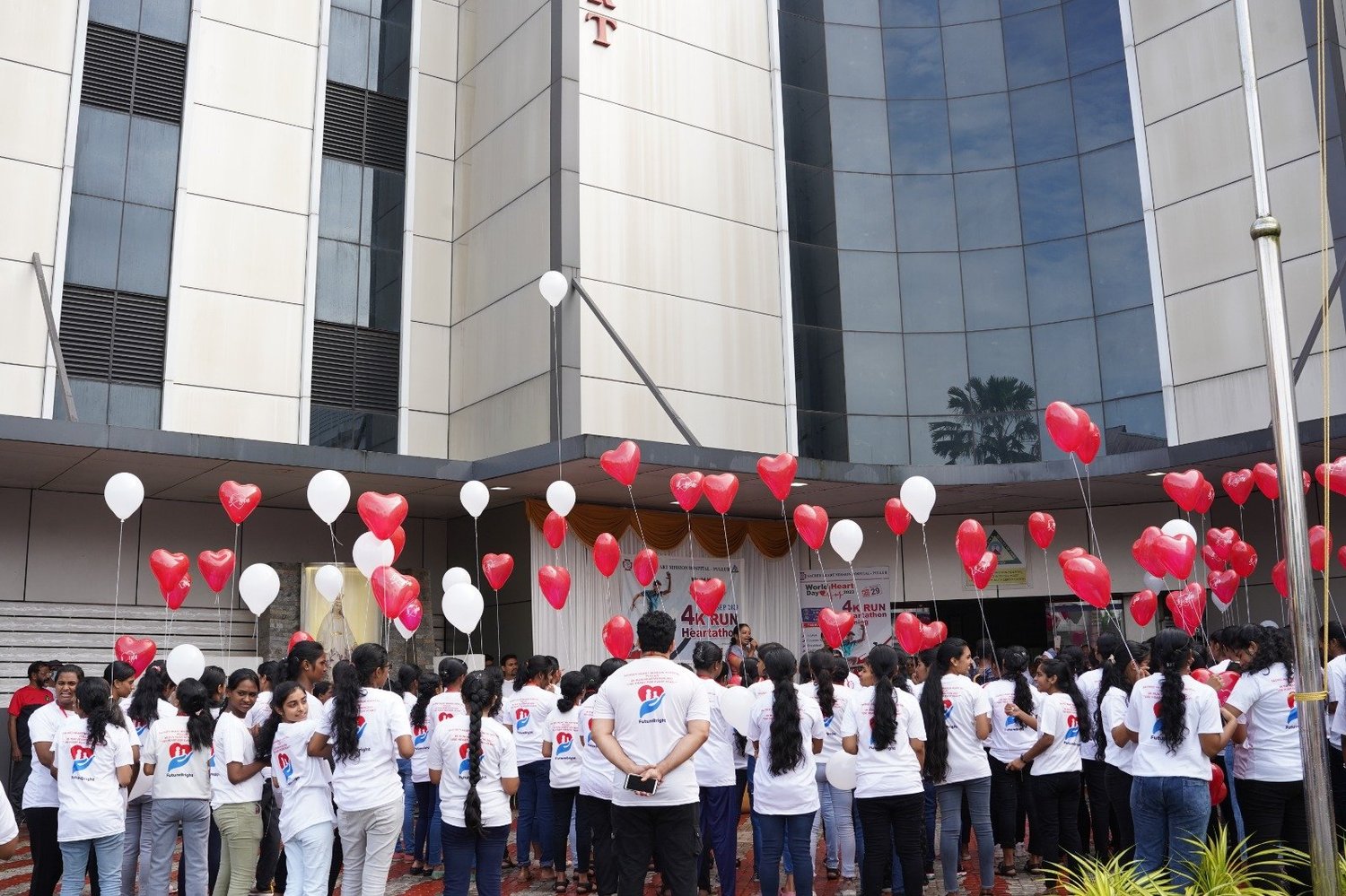
| 4K Heartathon (World Heart Day) | Pullur, India | 500+ | 2023 |
| Cardiology camp (ECG, labs, consults) | Kerala, India | 100+ | 2024 |
| School construction (co-funded), capacity | Boassa, Burkina Faso | 300 | 2026–27 |
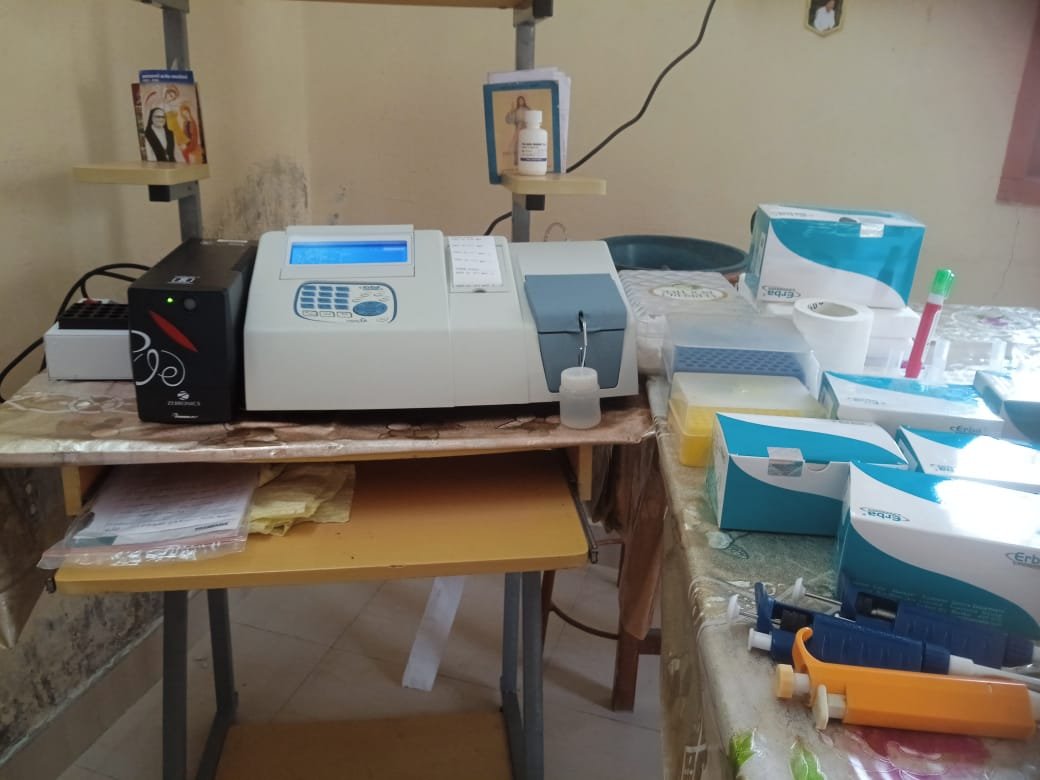
| Chemical analyzer donated to rural clinic | Vallarpadam, Kerala | 1 | 2024 |
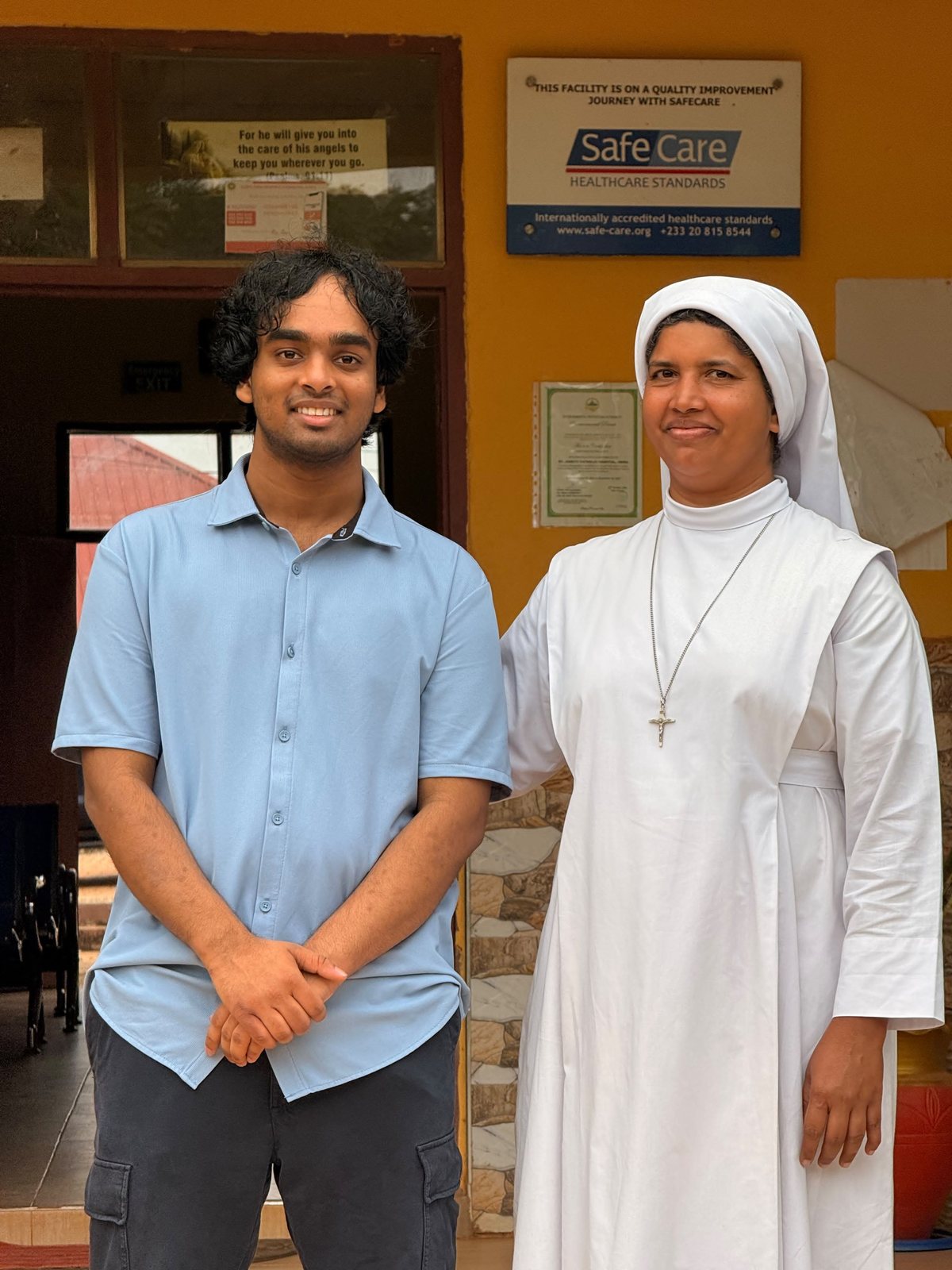
Funding statement. Operations are funded in part by the family egg farm the author runs: 40 chickens and roughly 8 hours a week year-round of flock care, egg sales, and tractor and land maintenance, with proceeds directed to FutureBright's camps. Attendee knowledge at health camps is measured with pre/post surveys and the findings published, outcomes, not anecdotes.
5Timeline
- 2023: Co-founded and incorporated FutureBright Inc. (501(c)(3)) at age 15; joined the Kyle J. Taylor Foundation as volunteer and junior board member.
- Sept 2023: 4K Heartathon with Mission Hospital Pullur, India (500+ runners).
- Jan 2024: Free cardiology camp, Kerala: 100+ patients; demand exceeded capacity.
- May 2024: Chemical analyzer donated to the clinic at Vallarpadam, Kerala.
- 2024–26: Literature review on topical corticosteroid safety written through Polygence; abstract published for the IRCC and the Polygence Symposium.
- 2025–26: Drosophila eczema model built in the Scientific Research Course; Best Poster Award at the IRCC (2026); presented at the Synopsys Championship. Eczema Vision open-source AI model begun with Curious Cardinals.
- 2025–26: School rises in Boassa, Burkina Faso: foundation January 2026, walls by March, opening targeted 2026–27.
- July 2026: Ghana Health Mission: 400+ screened in one day at the Abira Chiefs' Palace.
- 2026–27: Senior year, with five further AP courses; peer mentor in Valley Christian's Service Learning program; FutureBright's Boassa school targeted to open.
6Beyond Medicine
Clinical and community service at home in the Bay Area: as a junior board member and certified CPR instructor with the Kyle J. Taylor Foundation (2023–present), I staff free youth heart screenings at Santa Clara County high schools (check-in, vitals, and ECG stations) and organize and teach CPR training events. Since 2023 I have helped run the monthly Serving the Needy meal service at St. Thomas Syro-Malabar Catholic Church in Fremont, from setup to serving the main entrée; I volunteered in the St. Francis of Assisi parish gift shop (2023–24), served as a summer ambassador for the San José Public Library (50 hours), and this year I am a peer mentor in Valley Christian's Service Learning program. I have studied Spanish for four years. My family's story begins in Kerala, India, which is why FutureBright's first health camps ran there. And the farm (Section 4, Funding statement) remains the least glamorous work I do, and the most reliable.
7Conclusion & Future Work
Medical school is the long-term goal, the ability to treat the patients I can currently only organize for. Near-term: growing FutureBright's screening model, opening the Boassa school, and pushing the eczema research toward journal publication. Comments welcome; this page is versioned and will be revised.
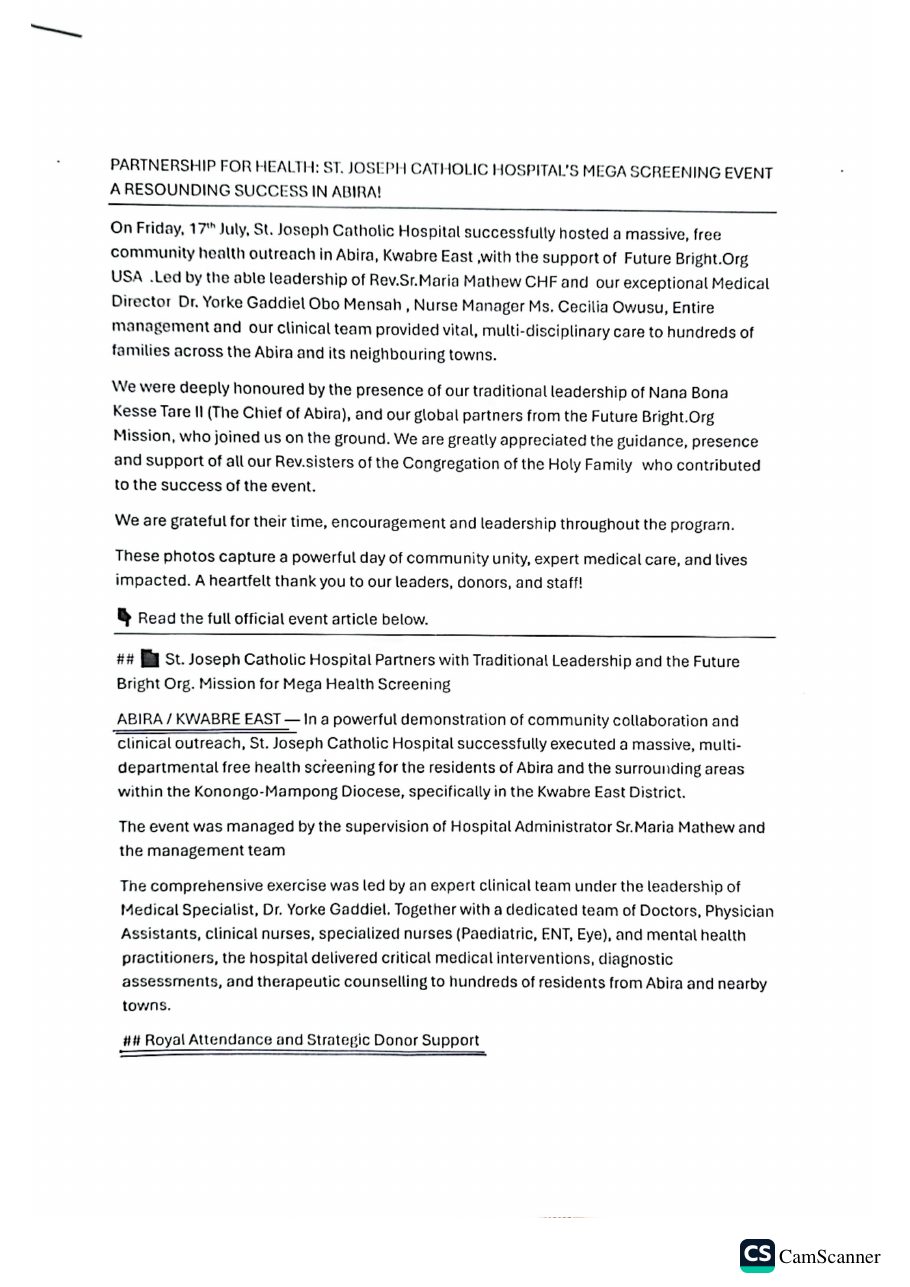
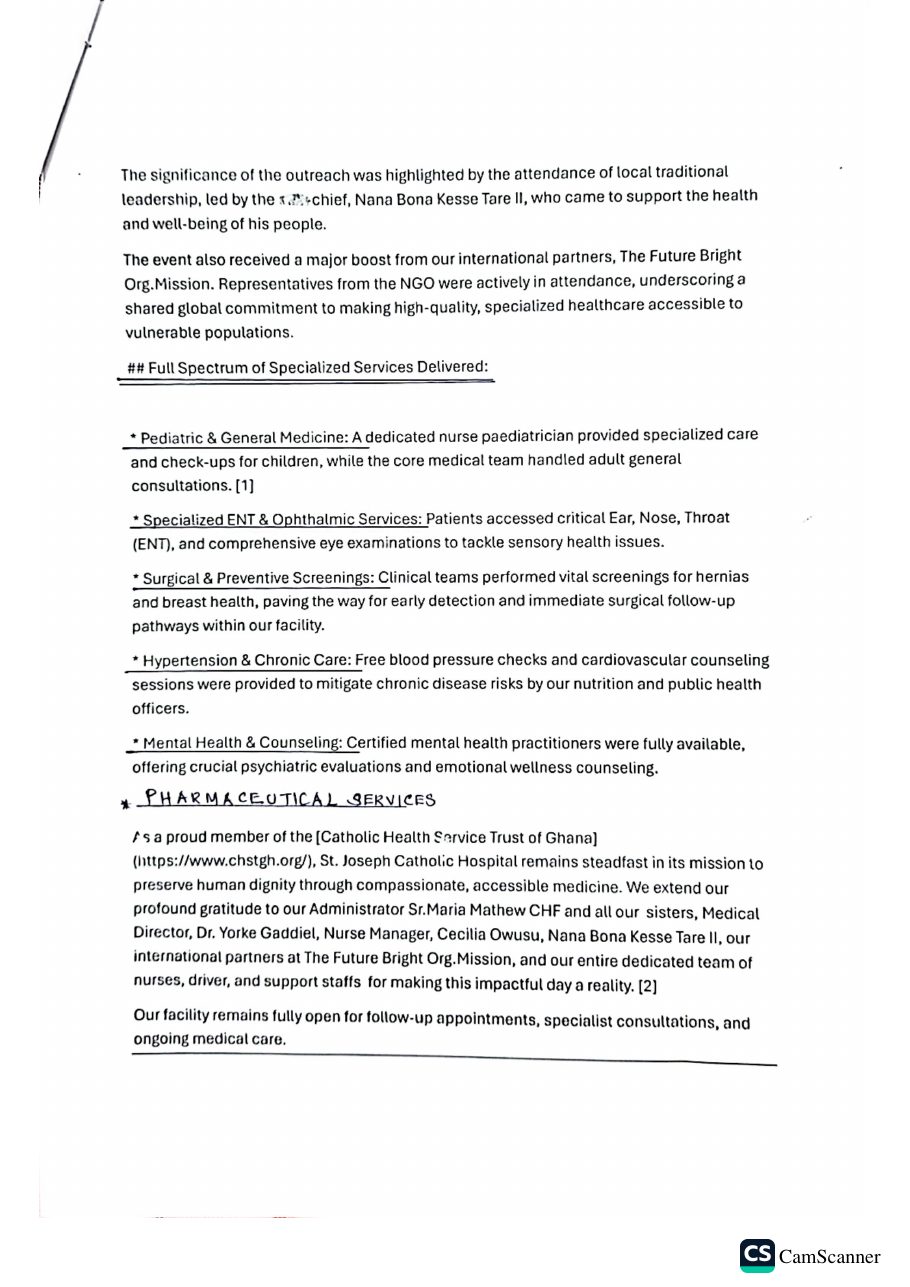
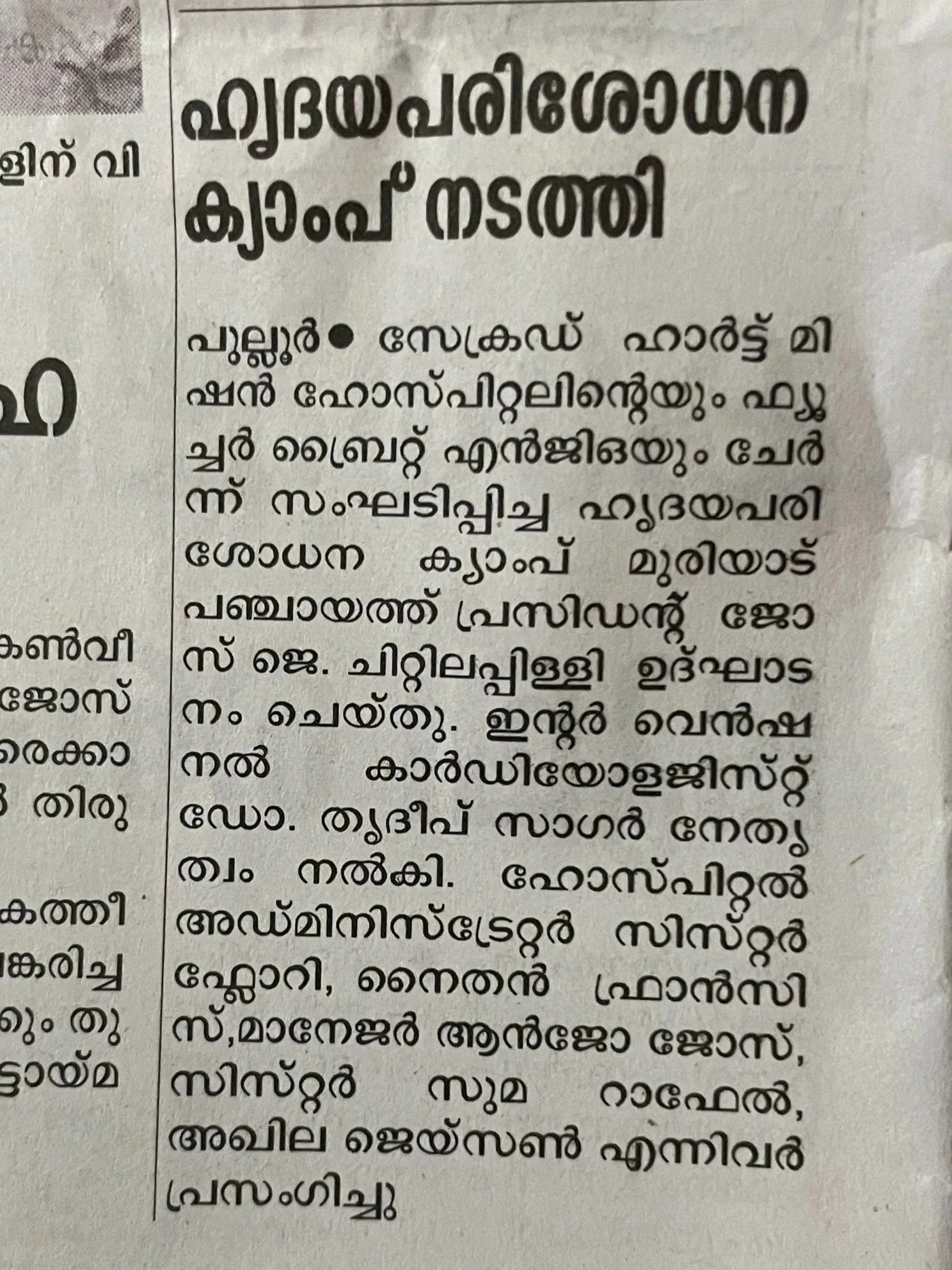
A final note on evidence. The record above is not self-reported alone; the institutions involved documented it themselves. Appendix A reproduces the primary documents: St. Joseph Catholic Hospital's post-event report on the Ghana screening, and local press coverage of the Kerala cardiology camp [5, 6].
Appendix A: Primary Documentation
References
- Francis, N. (2025). Adverse effects of topical corticosteroid usage in children: a review. Abstract published, International Research Conference for Children and Polygence Symposium; manuscript under journal review. [PDF]
- Francis, N. (2026). Drosophila melanogaster as an analogous model for ceramide-related eczema: a preliminary study. Abstract published; poster, International Research Conference for Children (Best Poster Award); Synopsys Science & Technology Championship. [PDF]
- Francis, N. (2026). Eczema Vision: open-source, in-browser eczema detection from skin images. Project page & live demo: nathanfrancis.org/vision; code (MIT): [GitHub]
- FutureBright Inc. (2023–2026). Published outcomes, surveys & financials. [thefuturebright.org]
- Malayalam press coverage, FutureBright cardiology camp, Kerala. Local newspaper, 2024.
- St. Joseph Catholic Hospital, Abira (2026). Partnership for health: mega screening event a resounding success in Abira. Post-event report, July 2026, issued by the hospital, crediting FutureBright as international partner. [context]